
Last Updated: October 23, 2026
Quick Summary
Eating wild venison gives you a lean red meat that is high in complete protein and low in fat and calories, with iron, zinc, B vitamins and modest omega-3s. It beats grain-fed beef on leanness and saturated fat, though its low fat means it dries out easily, so cook it carefully and handle it safely.
- A 3-ounce cooked loin or round portion has about 130-150 calories and 22-25 g protein.
- Trim visible fat aggressively, since fat on a shoulder or ground batch adds several grams per serving.
- Field dress promptly, cool the carcass quickly, wear gloves and cook ground venison to a safe internal temperature.
- Cook steaks fast and hot, braise roasts low and slow, and pull them early using a meat thermometer.
- Pregnant women, young children and immunocompromised people should be especially careful with wild game.
Table of Contents
- Why Wild Venison Deserves a Place on Your Plate
- Venison Nutrition Facts: What's Actually in a Serving
- Venison vs Beef Nutrition: A Side-by-Side Look
- Is Venison Safe to Eat? Field Dressing, Storage, and Contamination Risks
- Wild Versus Farmed Venison: Evidence and Caveats
- How to Cook Wild Venison So It Stays Tender
- Who Should Limit or Avoid Venison
- Frequently Asked Questions
Why Wild Venison Deserves a Place on Your Plate
Wild venison is the meat of free-ranging deer, harvested from natural landscapes rather than raised in feedlots, and it earns its place on the table because it delivers red-meat satisfaction with a leaner nutritional profile and a lighter footprint on the land. At Makana Wild, we source wild-harvested venison from Hawaiian landscapes where managing deer herds protects crops and native ecosystems, so the benefits of eating wild venison extend past your dinner plate.

Here is what most guides get wrong: they treat venison as a novelty, a seasonal curiosity for hunters. It is not. It is one of the cleanest red meats available, and the nutrition case for it is straightforward.
Below, we break down the venison nutrition facts, how it stacks up against beef, the safety steps that matter, and how to cook it so it stays tender.
Venison Nutrition Facts: What's Actually in a Serving
The short answer: venison is a dense source of complete protein with very little fat, and its calorie count reflects that leanness. But the useful answer is cut-specific, because a loin and a shoulder are not the same food on a nutrition label.
Here is the pattern most nutrition sources describe for lean, trimmed wild venison, expressed per 3-ounce cooked portion:
| Cut | Calories | Protein | Total fat | Saturated fat |
|---|---|---|---|---|
| Loin / backstrap | About 130-150 | About 22-25 g | About 2-4 g | About 1-2 g |
| Round / haunch | About 130-150 | About 22-25 g | About 2-4 g | About 1-2 g |
| Shoulder (braised) | About 170-200 | About 22-24 g | About 7-10 g | About 3-4 g |
| Ground venison (varies by fat added) | About 150-210 | About 20-23 g | About 5-12 g | About 2-5 g |
Treat these as ranges, not guarantees. Species, age, diet, and how thoroughly the cut was trimmed all move the numbers. What holds across the board is the pattern: high protein, low fat, low calories, and a saturated fat load well below conventional grain-fed beef.
Venison also supplies iron, zinc, and B vitamins, plus omega-3 fatty acids in modest amounts. The omega-3 to omega-6 ratio in wild game tends to be more favorable than in grain-fed meat, though the evidence base here is thinner than marketing copy suggests.
Two preparation details change the label more than most people expect. First, trimming: visible fat on a shoulder or ground batch can add several grams of fat per serving, so trim aggressively if leanness is the goal. Second, added ingredients: marinades, bacon wrapping, and fat added to ground venison raise calories, fat, and sodium, and those additions, not the meat, often explain why a venison dish lands closer to beef on the plate than the raw numbers suggest.
Venison vs Beef Nutrition: A Side-by-Side Look
Venison beats beef on leanness and calories in nearly every cut, but beef still wins on familiarity and margin for error in the kitchen.
The comparison below reflects the general pattern most nutrition sources describe for lean cuts. Wild venison tends to sit at the leaner end of that range.
| Attribute | Wild Venison | Grain-Fed Beef |
|---|---|---|
| Protein per serving | High, complete amino acid profile | High, complete amino acid profile |
| Total fat | Low | Moderate to high |
| Saturated fat | Lower | Higher |
| Calories | Lower per serving | Higher per serving |
| Iron and zinc | Present, well absorbed | Present, well absorbed |
| Omega-3 content | Higher relative to grain-fed beef | Lower |
| Cooking margin for error | Narrow | Wide |
That last row matters more than any spreadsheet. Beef forgivingly tolerates overcooking because its fat bastes the meat from the inside. Venison does not. The leanness that makes it a heart-health win in the nutrition column is exactly what makes it dry out in a hot pan.
Saturated fat and cholesterol in venison sit lower than in beef, which is why people watching their heart health often ask about it. Lower cholesterol in the meat does not automatically translate to lower cholesterol in your blood, and no single food decides that. Still, swapping some beef for venison is a reasonable move for anyone reducing saturated fat.
Is Venison Safe to Eat? Field Dressing, Storage, and Contamination Risks
Venison is safe to eat when it is field dressed promptly, kept cold, and cooked to temperature. The risks are real but manageable, and they live almost entirely in handling rather than in the meat itself.
This is the section most venison articles skip, and it is the one that matters most. Deer can carry chronic wasting disease, a prion illness affecting the animal's nervous system (the CDC). Guidance from the Centers for Disease Control and Prevention on chronic wasting disease advises against eating meat from animals that appear sick and recommends testing where available. The U.S. Department of Agriculture food safety guidance is equally clear on the basics: keep the meat cold, keep it clean, and cook it thoroughly.
A practical checklist for handling wild venison:
Makana Wild Carnivore Chips Hawaii Wild Harvested Venison 1 oz →
- Field dress the animal promptly and remove contaminated tissue
- Cool the carcass quickly; do not let it sit warm
- Wear gloves during dressing and avoid contact with spinal tissue
- Keep raw venison separate from other foods
- Cook ground venison to a safe internal temperature
- Freeze what you will not use within a few days
A common mistake is treating venison like beef at the cooler. It is leaner, so it dries and spoils differently. Keep it cold, wrap it well, and label the date.
Wild Versus Farmed Venison: Evidence and Caveats
Wild venison and farmed venison differ less in basic nutrition than the marketing suggests, but they differ meaningfully in diet, lifestyle, and how the animal was managed. The honest version of this comparison separates what is well supported from what is assumed.
What is reasonably well supported: wild deer eat a varied natural diet and roam, which generally produces leaner meat with a more pronounced, gamey taste. Farmed deer are typically raised on pasture or feed, and their meat is generally milder in flavor and more consistent in fat content because their diet and management are controlled.
What is assumed rather than proven: that wild is automatically more nutritious, cleaner, or safer. None of those follows from the word 'wild.' Wild meat carries handling risks that farmed meat does not, and farmed meat carries management questions that wild meat does not.
Here is the caveat nobody puts on the label: 'wild' is a claim, and claims need verification. Ask your supplier how the animal was harvested, where it came from, and whether the meat was tested.
At Makana Wild, our wild-harvested venison comes from free-roaming deer across Hawaiian islands, and the harvest is part of active conservation work to manage herds that damage crops and native ecosystems. That is a sourcing story you can verify with us directly, which is the standard any 'wild' claim should meet.
How to Cook Wild Venison So It Stays Tender
Cook wild venison fast and hot for steaks, low and slow for roasts, and never past medium-rare unless the cut demands it. The leanness that makes venison healthy is the same quality that punishes overcooking.
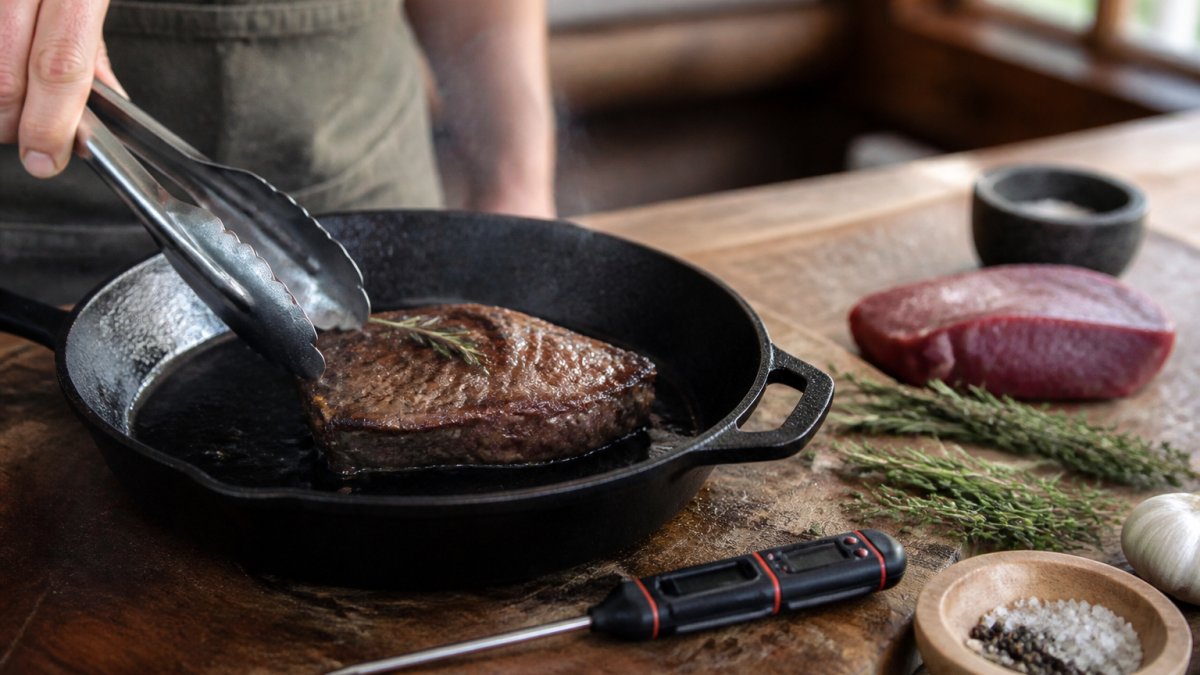
Four rules that carry most of the weight:
- Bring it to room temperature first. Cold meat seizes in the pan.
- Add fat. Venison has little of its own, so use oil, butter, or a marinade with olive oil.
- Sear hot and rest long. A hard sear builds crust; resting lets juices redistribute.
- Do not guess on doneness. Use a meat thermometer and pull it early.
For roasts and shoulder cuts, braise them. Low heat and moisture break down connective tissue that dry heat would turn to shoe leather. Ground venison works well in chili and tacos, where the sauce supplies the moisture the meat lacks.
Who Should Limit or Avoid Venison
Most people can eat venison as part of a balanced diet, but a few groups should be cautious. Pregnant women, young children, and anyone with a compromised immune system should be especially careful about wild game handling and should follow public health guidance on chronic wasting disease. People managing gout or high uric acid may want to moderate red meat intake generally.
Anyone on a low-purine diet should talk to their doctor before making venison a regular protein. The same goes for people with iron overload conditions, since venison is a rich iron source.
For everyone else, venison is a lean, nutrient-dense red meat that fits clean-eating and paleo-style diets well. Our Makana Wild Carnivore Chips are made with just two ingredients, wild-harvested venison and Hawaiian Alaea sea salt, for a shelf-stable way to get venison protein on the trail.
Frequently Asked Questions
Is wild venison meat healthy?
Wild venison is one of the leanest red meats available. It supplies high-quality protein with all nine essential amino acids, plus iron, zinc, and B vitamins, while carrying far less saturated fat than grain-fed beef. Because wild deer roam and eat a natural diet, the meat also tends to have a better omega-3 to omega-6 ratio than farmed red meat. The caveats are real, though: game meat must be field dressed and chilled quickly, and anyone who is pregnant, immunocompromised, or advised to limit iron should talk to a doctor before making it a staple.
Is venison healthier for you than beef?
In most cuts, yes. Venison vs beef nutrition comparisons consistently show venison with fewer calories and less total and saturated fat per serving, while protein stays roughly equal or higher. Venison also brings more iron and zinc per ounce than conventional beef. That said, grass-fed beef narrows the gap, and a lean beef cut can fit a healthy diet. The bigger difference is how the animal was raised and how the meat is handled after harvest, not the label alone.
How does wild venison compare with farm-raised venison?
Wild venison comes from free-roaming deer eating a natural diet, so the fat profile tends to be leaner and higher in omega-3s. Farmed venison is usually grain-finished, which makes it milder in flavor and more consistent in supply, but it can carry more saturated fat. Neither is automatically safer or better. Ask how the animal was harvested, how quickly it was chilled, and whether the meat was inspected. Those answers matter more than the wild-versus-farmed label.
How should you cook wild venison to keep it tender?
Wild venison is very lean, so it dries out fast. Cook steaks and chops hot and quick to medium-rare, then rest them for five minutes before slicing. For tougher cuts like shoulder or shank, braise low and slow with liquid until the meat pulls apart. Always use a meat thermometer: 145°F for whole cuts with a three-minute rest, and 160°F for ground venison. Avoid overcooking, and add fat back in the form of butter, oil, or a pan sauce.
The challenge with wild venison is not the nutrition, it is finding a source you can actually trust. Makana Wild delivers wild-harvested venison and island-raised, grass-fed beef free from antibiotics, hormones, and pesticides, with every purchase supporting responsible land management and conservation. Our Carnivore Chips, Protein Bombs, and Ulu and Venison Bars make clean venison protein easy to carry. Get started with Makana Wild and feed the wild in you.