
Table of Contents
- Start With the Right Cut: A Cut-by-Cut Guide to Wild Venison
- Venison Safe Handling: Field to Kitchen Practices
- How to Cook Venison Steak: Searing for a Perfect Crust
- How to Roast Venison Loin: Oven Techniques and Timing
- Venison Cooking Temperature: Doneness and Food Safety
- Slow-Cooking and Open-Fire Methods for Tough Cuts
- Troubleshooting Dry or Tough Wild Venison
- Conclusion: Serving Your Wild Venison
- Frequently Asked Questions
Last Updated: October 15, 2026
Start With the Right Cut: A Cut-by-Cut Guide to Wild Venison
The single biggest factor in how to cook wild venison well is the cut you start with. Wild venison is much leaner than farmed meat or beef, with far less intramuscular fat to insulate the muscle fibers during cooking. That means each cut needs a different method, a different level of heat, and a different target temperature.
Use the table below as your starting map, then read the notes under it for the reasoning.
Cut |
Where it comes from |
Best method |
Target internal temp |
Approx. timing |
|---|---|---|---|---|
Tenderloin |
Inner loin, along the spine |
Hot pan-sear or grill |
130-135°F |
2-3 min per side |
Backstrap / loin |
Along the spine |
Sear then roast, or medallions |
130-135°F |
10-15 min at 425°F whole |
Sirloin / round steak |
Hind leg |
Hot pan-sear or grill |
130-140°F |
3-4 min per side |
Shoulder |
Front leg |
Braise or slow-cook |
200-205°F |
6-8 hrs on low |
Neck |
Front, below head |
Braise or slow-cook |
200-205°F |
6-8 hrs on low |
Shank / lower leg |
Below the knee |
Braise |
200-205°F |
3-4 hrs covered |
Ground venison |
Trim and scraps |
Brown and simmer |
160°F |
Until no pink remains |
Steaks, Tenderloin, and Loin
These are the tender cuts, taken from the back and hindquarters. They suit fast, hot cooking because the muscle fibers are short and there is little connective tissue to break down.
- Venison steak (from the loin or leg): best pan-seared or grilled hot and fast. A 1-inch steak needs roughly 3-4 minutes per side for medium rare.
- Tenderloin: the most tender cut, perfect for a quick sear. It is small and thin, so watch it closely, a whole tenderloin can go from rare to well done in under a minute.
- Loin / backstrap: great roasted whole or cut into medallions. Sear it first for color, then finish in a 425°F oven for 10-15 minutes.
Treat these like you would a lean beef steak, but pull them 5°F earlier than you would beef. The lack of fat means carryover cooking is faster and less forgiving.
Roasts and Slow-Cook Cuts
Roasts come from the shoulder, neck, and lower leg. These cuts have more connective tissue, collagen that needs low, slow heat and moisture to dissolve into gelatin, which is what makes them tender.
- Shoulder and neck: ideal for slow-cooking, braising, or the crockpot. Cook them until they reach 200-205°F, at which point the collagen has broken down and the meat shreds with a fork.
- Deer leg roasts: roast low and slow at 300-325°F, or braise until fork-tender. A 3-pound leg roast typically needs 2.5-3 hours covered.
- Ground venison: use in place of ground beef in chili, tacos, and meatballs. Because it is so lean, add a tablespoon of oil or a little pork fat per pound to keep it from drying out.
Why the Cut Determines the Method
The mechanism is simple: tender cuts have little collagen, so heat only makes them tougher and drier the longer they cook. Tough cuts are full of collagen, which is tough when hot and fast but melts into soft gelatin when held at 200°F or above for a long time. Match the method to the collagen content and the cut takes care of itself.
Venison Safe Handling: Field to Kitchen Practices
Venison safe handling starts in the field and continues right up to the plate. Wild game carries a higher risk of harmful bacteria than store-bought meat because it isn't inspected the same way, so clean handling matters at every step.
Follow these basics:
- Field-dress the animal quickly and cool the carcass fast
- Keep the meat cold during transport, ideally near freezing
- Wear gloves when handling raw venison
- Chill meat to the refrigerator within a few hours
- Freeze what you won't cook within a few days
- Thaw frozen venison in the fridge, never on the counter
- Wash hands, knives, and surfaces after contact with raw meat
The USDA food safety guidance on wild game recommends cooking wild game thoroughly to kill harmful bacteria. We'll come back to that point, because it creates a real tension with how most people like their venison cooked.
How to Cook Venison Steak: Searing for a Perfect Crust
To cook venison steak, sear it in a hot pan for a short time and let it rest. A hard sear builds a brown crust while keeping the inside juicy, which is exactly what a lean cut needs.
Here's the method we recommend:
- Pat the steak dry and let it sit at room temperature for 20 minutes.
- Season both sides with salt and a spice rub.
- Heat a cast-iron skillet until it's smoking hot.
- Add a little lard, butter, or olive oil.
- Sear 2 to 3 minutes per side for medium rare.
- Rest the steak for 5 to 10 minutes before slicing.
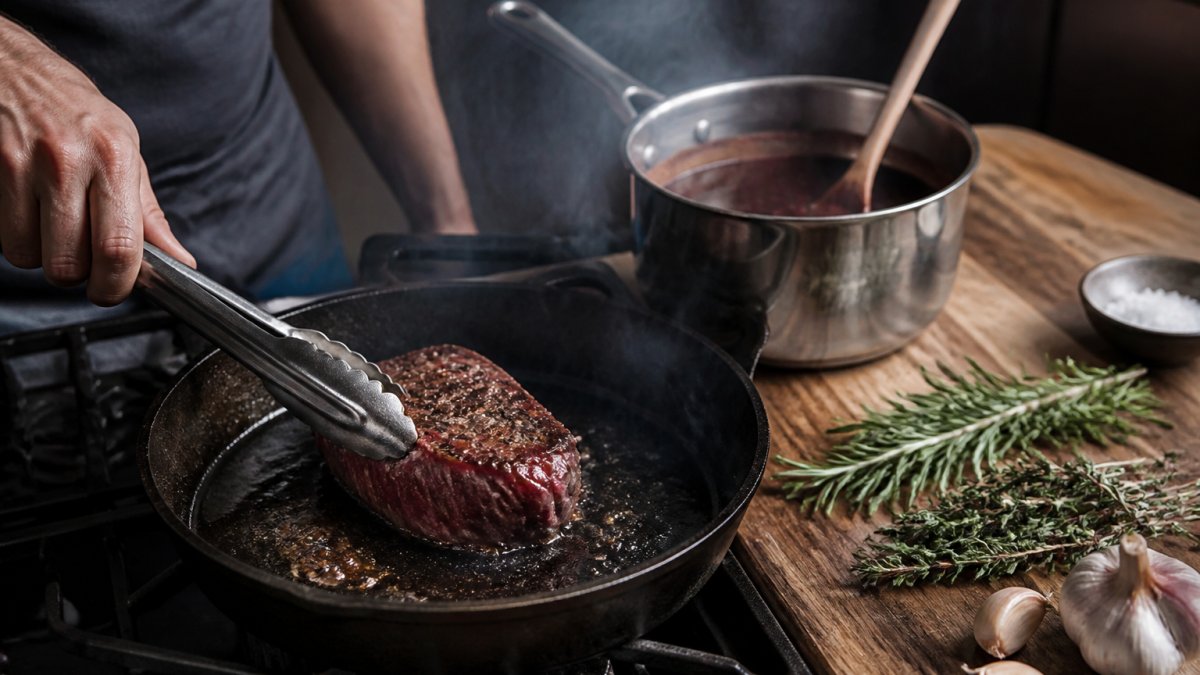
Pan-Sear Method and Red Wine Sauce
A red wine sauce is the classic partner for venison steak. It cuts the gamey flavor and adds richness to lean meat.
To build it, deglaze the hot pan with red wine after searing. Add stock and a knob of butter, then simmer until it thickens. A splash of balsamic vinegar or a spoon of sherry deepens the flavor. For a mushroom sauce, add dried mushrooms soaked in warm water, plus sweet onion cooked until soft.
How to Roast Venison Loin: Oven Techniques and Timing
To roast venison loin, use a hot oven for a short time and pull it early.
Set the oven to 425°F. Sear the loin in a pan first for color, then move it to the oven.
Let the roast rest for 10 minutes. The temperature will rise a few degrees as it rests, so pull it just before your target.
Venison Cooking Temperature: Doneness and Food Safety
Venison cooking temperature is where food safety and flavor pull in opposite directions. The USDA advises cooking wild game thoroughly to kill harmful bacteria, yet many cooks prefer venison medium rare. The way to reconcile the two is to understand what the guidance actually says, where to measure, and how carryover cooking changes your target.
Makana Hawaii Sea Salt Lavender Finishing Salt 4 oz →
What the Guidance Actually Says
The USDA food safety guidance on wild game recommends cooking wild game thoroughly. For whole cuts of meat, the USDA's general guidance is a minimum internal temperature of 145°F followed by a 3-minute rest. For ground meat, the guidance is 160°F with no rest required, because grinding distributes surface bacteria throughout the meat. Wild venison is not inspected the way commercial meat is, so the risk is higher than store-bought beef, and that is why the guidance leans conservative.
Doneness Chart
Doneness |
Internal Temperature |
Notes |
|---|---|---|
Rare |
120-125°F |
Not recommended for wild game |
Medium rare |
130-135°F |
Preferred by most cooks; pull at 125-130°F to allow for carryover |
Medium |
140-145°F |
A safer middle ground; pull at 135-140°F |
Well done |
160°F+ |
Safest, but driest |
Thermometer Placement and Carryover Cooking
Two details separate a good result from a dry one. First, placement: insert the thermometer into the thickest part of the meat, away from bone, fat, and the pan. For a loin or backstrap, that means the center of the thickest section.
Second, carryover cooking. When you pull meat off the heat, the outside is hotter than the inside, and that heat keeps traveling inward.
Whole Cuts vs. Ground Venison
The safety math is different for ground meat. Bacteria live on the surface of whole cuts, so searing the outside kills most of them and the inside can stay pink. Grinding mixes surface bacteria throughout the meat, so ground venison needs to reach 160°F all the way through. If you are making chili, tacos, or meatballs, cook the ground venison until no pink remains and the internal temperature reads 160°F.
The CDC information on foodborne illness notes that proper cooking is the most reliable way to kill harmful bacteria. The honest answer is that free-ranging wild venison carries more risk than farmed meat, so the safest choice is to cook it thoroughly. If you prefer medium rare, freeze the meat first, handle it cleanly from field to kitchen, and use a thermometer every time rather than guessing.
Slow-Cooking and Open-Fire Methods for Tough Cuts
Tough cuts need low, slow heat, which makes them the easiest cuts to get right.
For the crockpot, add the roast with stock, sweet onion, and herbs. Cook on low for 6 to 8 hours until the meat shreds with a fork.
Cooking venison over an open fire works well too. Sear the meat over hot coals, then move it to a cooler spot to finish.
Troubleshooting Dry or Tough Wild Venison
Dry or tough venison almost always comes down to one of three things: overcooking, the wrong cut for the method, or skipping the rest. Here's how to fix each.
Problem |
Likely Cause |
Fix |
|---|---|---|
Dry steak |
Cooked past medium |
Pull earlier, rest longer |
Tough roast |
High heat, short time |
Slow-cook with liquid |
Gamey taste |
Fat or silverskin left on |
Trim before cooking |
Chewy texture |
Cut with the grain |
Slice against the grain |
Gamey flavor is easy to manage. Soak the meat in a salt brine or buttermilk before cooking, and trim away fat and silverskin, which hold most of the strong taste. A spice rub with dried mushrooms or a red wine sauce also masks it well.
Conclusion: Serving Your Wild Venison
Cooking wild venison well comes down to matching the cut to the method and watching your internal temperature. Get those two right and lean meat stays juicy instead of dry.
For serving suggestions, pair venison with a mushroom sauce, a red wine reduction, or a light balsamic drizzle. A finishing salt makes a real difference here. Our Makana Hawaii Sea Salt Smoked Black Garlic adds a savory depth that suits roasted loin, while the Lavender and Espelette varieties bring a floral or gently spicy note to seared steak.

If you'd rather skip the field work, Makana Wild offers wild-harvested venison jerky that's free from antibiotics, hormones, and pesticides. Every purchase supports responsible land management and conservation. Get started with Makana Wild and taste the difference that clean, ethical sourcing makes.
Frequently Asked Questions
What temperature kills bacteria in venison?
The USDA recommends cooking venison to a minimum internal temperature of 145°F (medium-rare) for steaks and roasts, followed by a three-minute rest. Ground venison must reach 160°F. These temperatures kill harmful bacteria like E. coli and Salmonella. Always use a meat thermometer to verify doneness, as color alone is not a reliable indicator of safety.
How do you keep venison from drying out?
Wild venison is very lean, so it dries out quickly. Sear steaks and roasts at high heat to form a crust, then finish at a lower temperature. Never cook beyond medium-rare (130-135°F). For slow-cook cuts, braise in liquid like red wine or mushroom sauce. Resting meat for 5-10 minutes after cooking allows juices to redistribute. Barding with lard or butter also helps retain moisture.
Should you cook venison medium rare?
Yes, medium-rare (130-135°F) is ideal for venison steaks, loin, and tenderloin. This doneness preserves the meat's natural tenderness and juiciness. However, food safety guidelines recommend 145°F for whole cuts. If you prefer medium-rare, ensure the meat was handled properly from field to kitchen and sourced from a reputable provider. Ground venison should always be cooked to 160°F.
How should you handle wild venison before cooking?
Field-dress venison immediately after harvest to cool the meat quickly. Remove all fat and silverskin, as these carry gamey flavor. Refrigerate at 35-40°F and use within 3-5 days, or freeze for up to 12 months. Thaw frozen venison in the refrigerator, never on the counter. Before cooking, pat dry and bring to room temperature for even cooking. Always wash hands, tools, and surfaces that contact raw meat.