
Table of Contents
- What Hormone-Free Beef Actually Means
- How Conventional Beef Production Uses Growth Hormones
- Hormones in Beef and Human Health: What the Science Shows
- Hormone-Free Beef vs Organic Beef: Key Differences
- How to Identify Hormone-Free Beef at Purchase
- Antibiotics Versus Hormones: Understanding the Distinction
- Cost, Availability, and Quality Trade-Offs
- Making Your Choice: Practical Next Steps
- Frequently Asked Questions
Last Updated: October 21, 2026
What Hormone-Free Beef Actually Means
Hormone-free beef is meat from cattle raised without synthetic growth-promoting hormones. The term carries specific legal meaning in the U.S., but what it guarantees requires looking past the label.
When you see "hormone-free" or "no hormones administered" on beef packaging, the USDA requires producers to document that cattle never received synthetic hormone implants. This differs from organic beef, which follows broader production standards; hormone claims address one practice, not overall herd management or feed quality.
The regulatory definition and labeling rules
The USDA allows "no hormones administered" or similar claims only when producers verify cattle received no synthetic hormones during their entire lives, keeping records and submitting documentation. But the label doesn't require third-party verification, producers self-certify to the USDA.
This creates a gap between what the label promises and what consumers can verify. A "hormone-free" package tells you the producer claims no synthetic hormones were used, not that an independent auditor confirmed it.
Naturally occurring hormones versus added hormones
All beef contains hormones naturally. Cattle produce testosterone, estrogen, and progesterone as part of normal biology, whether or not they receive implants. The hormone-free label addresses added synthetic hormones, not those present in the animal itself.
A hormone-free steak still contains naturally occurring hormones; the difference is the absence of synthetic implants designed to accelerate growth. Natural hormone content in beef is substantially lower than in many other foods, including dairy and eggs, but the label only controls for synthetic additions.
How Conventional Beef Production Uses Growth Hormones
Conventional cattle operations often use hormone implants to improve feed efficiency and reduce time to market. These implants, typically placed in the ear, release hormones like estradiol, progesterone, and testosterone over months. The practice is legal, FDA-approved, and widespread.
The implants increase the rate at which cattle convert feed into muscle tissue. For consumers, this historically meant lower beef prices, though that relationship has grown more complex as demand for hormone-free beef has risen.
Hormone implants and their role in cattle growth
Hormone implants are small pellets inserted under the skin of the ear. They dissolve slowly, releasing hormones over 90-120 days depending on the formulation. Some are designed for growing cattle; others for finishing cattle before slaughter.
The implants increase protein synthesis and reduce the feed needed to produce a pound of beef. A steer on implants might reach market weight in 18-20 months instead of 24. This efficiency matters at scale: large operations move more cattle through their facilities annually, reducing per-unit overhead.
Feed efficiency and time on feed differences
Conventional cattle typically spend 6-8 months in feedlots eating grain-based diets designed to maximize caloric intake and rapid weight gain. Hormone implants amplify this by helping the animal convert feed into muscle more efficiently.
Hormone-free cattle often need 1-2 additional months to reach the same market weight, or finish at slightly lower weights. This extended timeline raises feed and labor costs, one reason hormone-free beef typically costs more. Feed conversion for non-implanted cattle runs roughly 8-12% higher.
Hormones in Beef and Human Health: What the Science Shows
The scientific question is whether eating beef from hormone-implanted cattle poses health risks to humans, and this is where claims often exceed what research demonstrates.
Hormone implants used in cattle are synthetic versions of naturally occurring hormones, identical or structurally similar to what the body produces. When consumed, they enter the digestive system and are broken down like any other protein-based hormone; the body doesn't absorb intact hormones efficiently from food because stomach acid and digestive enzymes denature them.
Hormone exposure from food sources in context
The hormone content in a serving of conventional beef is negligible compared to hormones naturally present in other foods. A 3-ounce serving of beef from implanted cattle contains roughly 1.9 nanograms of estrogen; a single egg contains 100+ nanograms, and a glass of milk contains 10-15.
If hormone exposure from beef were a meaningful health concern, it would apply even more strongly to dairy and eggs, which contain more naturally occurring hormones than implanted beef. Yet public health agencies don't recommend limiting egg or milk consumption on hormone grounds.
Research findings on health concerns and limits of evidence
Some studies have examined whether hormone residues in beef could contribute to early puberty or hormone-sensitive cancers. The evidence has not established a causal link.
That said, research has limitations. Most studies can't isolate hormone residues from other dietary and lifestyle factors, and long-term studies designed to measure their health effects are sparse.
What the data shows: hormone residues in beef are extremely small, the body doesn't absorb intact hormones efficiently from food, and epidemiological evidence doesn't support a strong link between beef consumption and hormone-related health problems.
Hormone-Free Beef vs Organic Beef: Key Differences
These labels describe different production standards and guarantee different things.
Hormone-free beef guarantees the absence of synthetic growth hormones. It says nothing about antibiotics, pesticides, feed quality, or living conditions. A hormone-free steer can still receive antibiotics, eat pesticide-treated grain, or be raised in a conventional feedlot.
Organic beef requires certification to USDA organic standards. Certified organic cattle cannot receive synthetic hormones or antibiotics, must be fed organic feed free from synthetic pesticides and fertilizers, and must have pasture access.
What each label guarantees and what it doesn't
A "hormone-free" label guarantees one thing: no synthetic hormone implants. It doesn't guarantee:
- Antibiotic-free status
- Organic feed
- Grass-fed diet
- Pasture access
- Third-party verification
- Any specific animal welfare standard
An "organic" label guarantees:
- No synthetic hormones
- No synthetic antibiotics (though some natural antibiotics are allowed)
- Organic feed
- Pasture access
- Third-party certification
- Compliance with USDA organic standards
The price difference reflects these production requirements: organic beef typically costs more than hormone-free beef because its standards are more comprehensive.
Grass-fed, grain-fed, and their relationship to hormone claims
Grass-fed cattle eat pasture for their entire lives (or most of it). Grain-fed cattle spend their final months in feedlots eating grain-based diets. Both can be hormone-free.
Grass-fed beef is often positioned as more natural or healthier, but hormone status is independent. A grass-fed steer can still receive implants during finishing; a grain-fed steer can be raised without hormones.
Nutritional differences between grass-fed and grain-fed beef are real but modest. Grass-fed typically has slightly higher omega-3s and lower omega-6 ratios; grain-fed has higher marbling and different fat composition.
How to Identify Hormone-Free Beef at Purchase
Reading the label correctly is your first step. Look for claims like "no hormones administered," "hormone-free," or "raised without added hormones." These indicate the producer claims no synthetic hormone implants were used.
Makana Wild Carnivore Chips Field Harvested Lakota Bison 1 oz →
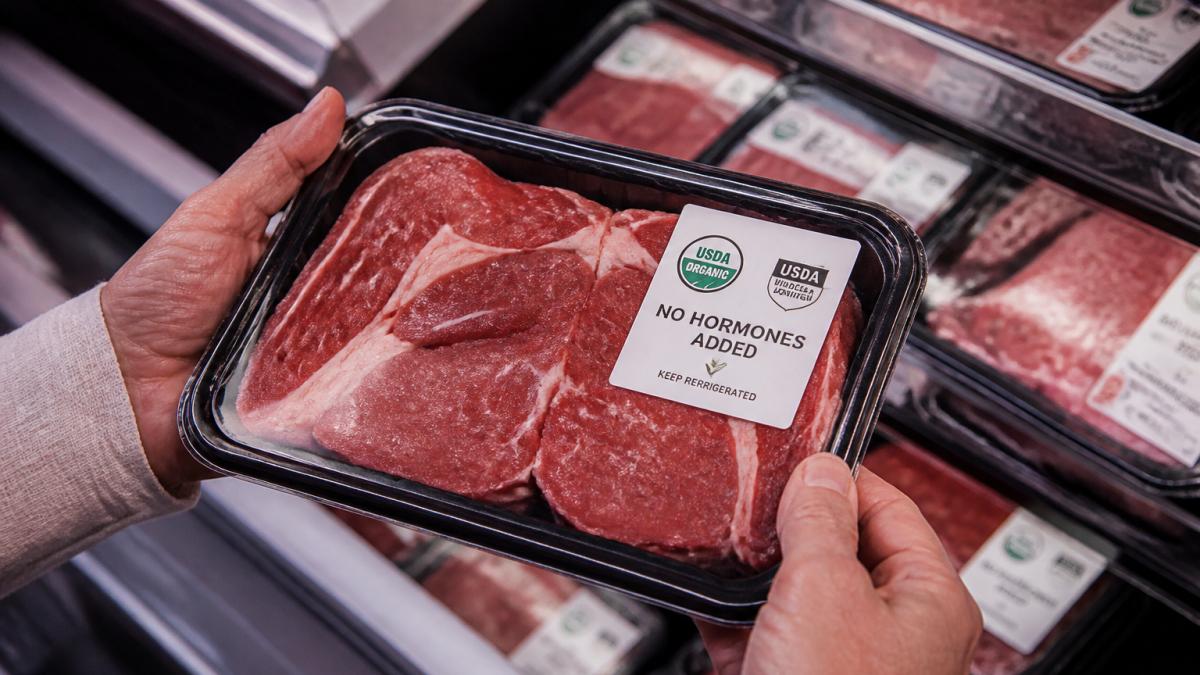
The USDA requires that any hormone-free claim be accompanied by a statement: "Federal regulations prohibit the use of hormones in poultry. Federal regulations prohibit the use of hormones in beef." This disclaimer appears because some consumers confuse hormone use across different meats. If you see this disclaimer alongside a hormone-free claim on beef, the claim is legitimate.
Reading labels and understanding USDA claims
The exact wording matters. "No hormones administered" is the clearest claim. "Hormone-free" means the same thing. "Natural" does not guarantee hormone-free status, natural beef can still have received implants.
Look for the USDA Process Verified seal. This indicates the USDA has reviewed the producer's documentation and verified their claims.
Check the source. Beef labeled hormone-free from major retailers typically comes from producers who maintain records and submit to USDA review. Smaller producers or direct-from-farm purchases require more investigation on your part.
Verification and traceability: knowing where your beef comes from
Third-party certification provides more assurance than USDA Process Verified claims alone. Certifications from organizations like the American Grassfed Association or certified organic operations include independent audits and ongoing verification.
If you're buying directly from a producer or through a meat service, ask for documentation. Legitimate producers keep records of their cattle's medical history, including what hormones (if any) were administered.
At Makana Wild, we source island-raised beef and wild-harvested venison with complete traceability. Our commitment to hormone-free, antibiotic-free protein means every product is ethically sourced and free from antibiotics, hormones, and pesticides.

Antibiotics Versus Hormones: Understanding the Distinction
These are separate issues, and the distinction matters. Antibiotics treat or prevent bacterial infections. Hormones promote growth.
Conventional beef production often uses both. Antibiotics are administered to prevent illness in crowded feedlot conditions. Hormones accelerate growth. Together, they reduce production time and costs.
The public health concern around antibiotics in beef is different from the concern around hormones.
Hormone residues don't create resistance or direct toxicity concerns.
If antibiotic stewardship matters to you, look for "antibiotic-free" or "raised without antibiotics" claims. These are separate from hormone-free status.
Cost, Availability, and Quality Trade-Offs
Hormone-free beef costs more than conventional beef. The primary reason is production efficiency. Cattle without hormone implants require more feed and more time to reach market weight. This extends the production cycle and increases per-unit costs for the producer.
A conventional feedlot steer might cost a producer $800-$1,200 in feed and care over 18 months. A hormone-free steer costs roughly 10-15% more due to the extended timeline and higher feed consumption. These costs get passed to consumers.
Why hormone-free beef costs more
The price difference at retail is typically 15-25% higher for hormone-free beef compared to conventional beef. Some of this reflects the production cost difference. Some reflects consumer willingness to pay for the hormone-free claim itself, independent of actual production differences.
Availability also affects price. Hormone-free beef represents a smaller share of total beef production. Smaller supply relative to demand supports higher prices. As demand for hormone-free beef grows, production scales up, and prices may moderate over time.
Quality, flavor, and marbling considerations
Hormone-free beef is not inherently better in quality or flavor than conventional beef. The taste difference, if any, depends more on the animal's breed, diet, age, and how the meat is handled than on hormone status.
Marbling, the fat distributed through muscle tissue, is sometimes lower in hormone-free beef because the cattle have less time to develop it before slaughter.
Grass-fed hormone-free beef often has less marbling than grain-fed conventional beef, but the difference is about finishing diet and time, not hormone status alone.
Making Your Choice: Practical Next Steps
Start by clarifying what matters to you.
Read labels carefully. "Hormone-free" means no synthetic implants. It doesn't guarantee organic, antibiotic-free, grass-fed, or any other production practice.
Consider your budget. Hormone-free beef costs more.
Look for verification. USDA Process Verified is better than no verification. Third-party certification is better than that.
When shopping for hormone-free beef, Makana Wild's island-raised beef and wild-harvested venison offer complete transparency.

Choosing hormone-free beef is ultimately a personal decision based on your values and priorities.
Frequently Asked Questions
What does hormone-free beef mean exactly?
Hormone-free beef comes from cattle raised without added growth-promoting hormones. The USDA regulates this claim strictly: beef labeled 'no hormones administered' means the producer did not use synthetic hormone implants or hormone-based feed additives during the animal's lifetime. Cattle naturally produce hormones; the label refers to added hormones only. Third-party verification or producer documentation typically backs these claims.
Is hormone-free beef significantly healthier than conventional beef?
The health difference depends on your priorities. Hormone-free beef eliminates exposure to added synthetic hormones, which some consumers prefer as a precaution. However, scientific evidence linking residual hormone levels in conventional beef to human health problems remains limited. Both hormone-free and conventional beef provide high-quality protein, iron, and B vitamins. Your choice may rest more on personal risk preference and ethical sourcing values than proven health superiority.
How can I verify that beef is truly hormone-free and not just labeled that way?
Look for USDA certification labels and third-party verification marks on packaging. Ask your butcher or retailer for producer documentation showing hormone-free practices. Direct sourcing from ranchers, especially those managing small herds or wild-harvested operations, offers higher traceability. Products like Makana Wild's wild-harvested venison and grass-fed beef are ethically sourced and free from antibiotics, hormones, and pesticides.
What's the difference between hormone-free and grass-fed beef labels?
Hormone-free and grass-fed address different aspects of production. Hormone-free means no added growth hormones; grass-fed means cattle ate grass rather than grain for most of their lives. A beef product can be grass-fed but still contain added hormones, or hormone-free but grain-fed. Organic beef typically excludes both added hormones and synthetic pesticides, but read labels carefully, terms overlap but don't guarantee identical practices across all certifications.