
Quick Summary
To verify wild venison sourcing, ask the seller where the animal was harvested, how it was taken, who processed it, and how the carcass was cooled. Trustworthy sellers answer these questions specifically and can back them up with lot numbers, batch records, or residue test results. Vague claims like "all natural" should not be accepted.
- Ask for the specific region where the animal was harvested, not just the country.
- Confirm the animal was free-roaming and taken by hunting or a managed program.
- Request a lot number or batch record that matches the product you are buying.
- Ask how quickly the carcass was cooled after harvest and where it was processed.
- Treat vague answers like "trust us" as a reason to look for another seller.
Table of Contents
Why Verifying Wild Venison Sourcing Matters
Wild venison sourcing is hard to check from a label alone, and the gap between "wild" and "wild-harvested" can change what you actually buy, so it pays to verify wild venison sourcing before you order. For the nutrition and safety background on wild venison, read our wild venison benefits guide. Buyers should know how to test any seller's claims before they order. The short version: ask where the animal came from, how it was taken, how it was handled, and who can prove it.
Verifying wild venison sourcing matters for three reasons:
- Labels can use "wild" loosely, and not every seller means the same thing.
- Handling after harvest affects safety and quality as much as the origin does.
- A seller who answers specific questions clearly is easier to trust over time.
This guide is designed to help you ask the right questions and spot weak answers. Think of it as a checklist you can use on any seller, not only ours.
Understand What Wild-Harvested Actually Means
"Wild-harvested" generally means the animal was free-roaming and taken by hunting or culling, rather than raised on a farm. That is a different process from farm-raised venison, and the difference should show up in the seller's documentation.
Ask whether the animal was:
- Free-roaming in natural habitat, not penned or fed as livestock
- Taken by licensed hunters or a managed program
- Harvested in a specific region the seller can name
Be cautious if a seller uses "wild" as a marketing word without any description of how the animal was taken. A clear, specific answer is a good sign.
Read the Label and Check Origin Claims
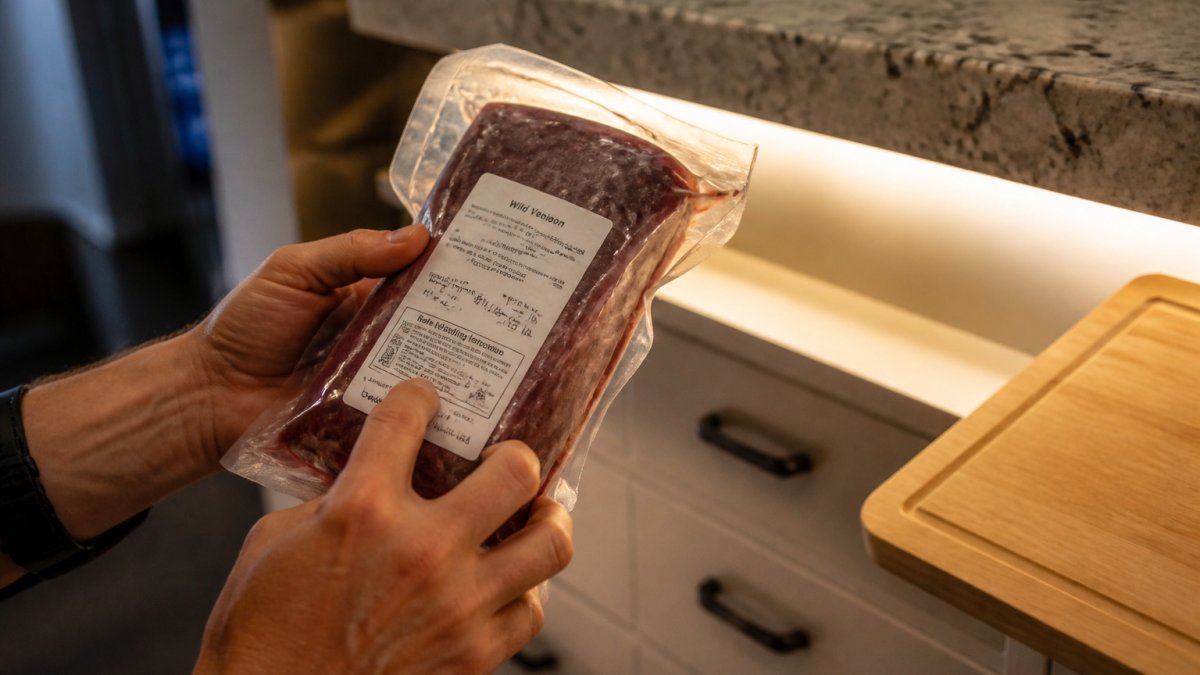
Labels are the first place to check, but they are only a starting point. Look for a named origin, such as an island, state, or region, rather than a vague phrase like "imported" or "natural."
Check for:
- A specific place of harvest, not just the country or brand
- Clear wording about wild harvest versus farm raising
- Handling or processing details printed on the package or product page
- Lot numbers or batch codes you can match to a seller record
If a label claim cannot be backed up by a seller's records, treat it as unverified.
Trace the Animal From Harvest to Your Table
Tracing means following the meat from the field to your kitchen. A trustworthy seller can describe each step and provide documents at key points.
Makana Wild Carnivore Chips Hawaii Wild Harvested Venison 1 oz →
A simple trace usually covers:
- Harvest: where and when the animal was taken, and by whom
- Field handling: how quickly the carcass was cooled
- Processing: where the meat was cut and packaged
- Shipping: how it was kept cold and how long it took to arrive
Keep a note of every answer you receive. If a seller cannot tell you the harvest area or the processing location, that is a red flag.
Questions to Ask Any Venison Seller
Use these questions before you buy. Good sellers answer them without hesitation:
- Was this animal free-roaming and wild-harvested? Where exactly?
- Who harvested it, and under what license or program?
- How was the carcass cooled after harvest, and how fast?
- Where was it processed, and by whom?
- Can you share a lot number or batch record for this product?
- Do you test for residues, and can you share the results?
Vague answers such as "trust us" or "it's all natural" do not answer these questions. Ask again, and if the answer stays vague, look elsewhere.
Confirming Safe Processing and Handling
Safe processing matters as much as sourcing. Wild game should be cooled quickly after harvest, kept cold through transport, and processed in a clean facility. Once you receive the meat, store it in the refrigerator or freezer right away.
When you cook wild venison, use a food thermometer and cook to a safe internal temperature. For detailed preparation steps, read our guide on how to cook wild venison.
Choosing a Verified Wild Venison Source for Your Next Order
Once you have checked a seller's answers, compare them against your own priorities. Before ordering, you can also learn how fresh meat ships safely across the US mainland. If you want a verified option, our Makana Wild Carnivore Chips, Hawaii wild-harvested venison, 1 oz are made from wild-harvested Hawaiian venison with only two ingredients: venison and Hawaiian Alaea sea salt.

Keep asking questions until you are satisfied with the answers. If you are weighing delivery services, see our side-by-side comparison of CrowdCow and Porter Road. A good seller will welcome the scrutiny, and a seller who does not is telling you something important.
Frequently Asked Questions
How can you tell whether venison is wild-harvested or farm-raised?
Look for specifics rather than general wording. Wild-harvested venison comes from free-roaming deer taken in the wild, usually under a state hunting or game-processing permit, while farm-raised venison comes from animals kept in enclosures. Ask the seller how the animal was taken, where, and by whom. A credible seller can describe the harvest area, the season, and the processing facility, and can point to paperwork that backs up those details. Vague phrases like natural or free-range do not confirm wild harvest on their own.
What documents should a venison seller provide to verify sourcing?
A transparent seller should be able to provide records that connect the meat to a specific harvest. These can include the hunting tag or harvest authorization number, the date and general location of the harvest, and processing or USDA-inspected facility records for the cut or product. Where a state-licensed processor handled the animal, ask for its license information. Keep records of the lot or batch number on the package so you can match the product to the documents if questions come up later.
What questions should I ask a butcher or retailer about venison?
Ask where the animal was harvested, which state and region, and when. Ask whether the meat was field-dressed and processed by a licensed facility, and where. Ask how the meat was chilled and transported, and whether the product has been tested for residues if they make that claim. Ask whether the lot can be traced back to a harvest record. Sellers who handle wild game regularly will answer these questions without hesitation. Evasive answers are a red flag worth noting.
What does traceability mean for wild game meat?
Traceability means you can follow a product back through each step it took, from the harvest to processing, packaging, and sale. For wild venison, this typically covers the harvest record, the processor's intake log, and the batch or lot number on the package. Strong traceability lets a seller identify exactly which animals went into a given product, which matters for recalls, quality concerns, and confirming that origin claims are accurate.