
Quick Summary
Shipping fresh meat to the US mainland works when the product stays cold the whole trip, which means vacuum-sealed packaging, insulation, and coolant such as dry ice or frozen gel packs. Choose the fastest carrier with an overnight option, and book the earliest weekday delivery you can.
- Check each carrier's perishable policy before packing anything.
- Vacuum-sealed meat holds up better than loose wrapping because it limits air and moisture loss.
- Keep a barrier layer between meat and coolant to avoid partly freezing the product.
- Choose frozen shipping if delivery could take more than a day or two.
- Book the earliest weekday delivery to avoid weekend delays in warm trucks.
Table of Contents
- What Shipping Fresh Meat to the Mainland Involves
- Step 1: Know the Shipping Rules for Fresh Meat
- How to Package Meat for Shipping
- Shipping Frozen Meat vs. Chilled Meat
- Shipping Meat with Dry Ice
- Choosing a Carrier and Shipping Meat Overnight
- Booking Your Shipment Through Makana Wild
- Frequently Asked Questions
What Shipping Fresh Meat to the Mainland Involves
Shipping fresh meat across the US mainland is possible, but it takes planning. The meat has to stay cold the whole trip, arrive safe to eat, and reach the buyer on time. Most problems come from a weak package, a slow carrier, or a missed delivery day.
Think of it as a cold chain. Every link, from packing to the doorstep, needs to hold the same low temperature. One weak link can spoil the whole box.
The core challenges are:
- Keeping product below safe temperatures for the full transit time
- Meeting carrier rules for perishable goods
- Making sure someone can receive the box on the delivery day
A common mistake is treating meat like any other parcel. Fresh meat needs cold packs, insulation, and a carrier that delivers quickly. Plan for the shortest route and the earliest weekday delivery you can get.
Step 1: Know the Shipping Rules for Fresh Meat
Rules for shipping meat depend on the carrier, the product type, and how it is packed. Check each carrier's perishable policy before you pack anything. Some carriers limit which days they will ship certain items, or require specific labeling.
Start by reading the carrier's terms for food and cold goods. Then confirm the rules for your route. Ask the carrier directly if you are unsure.
How to Package Meat for Shipping
Good packaging keeps meat cold and protects it from leaks. Start with the product itself. Vacuum-sealed packs hold up better than loose wrapping, because they limit air exposure and moisture loss.
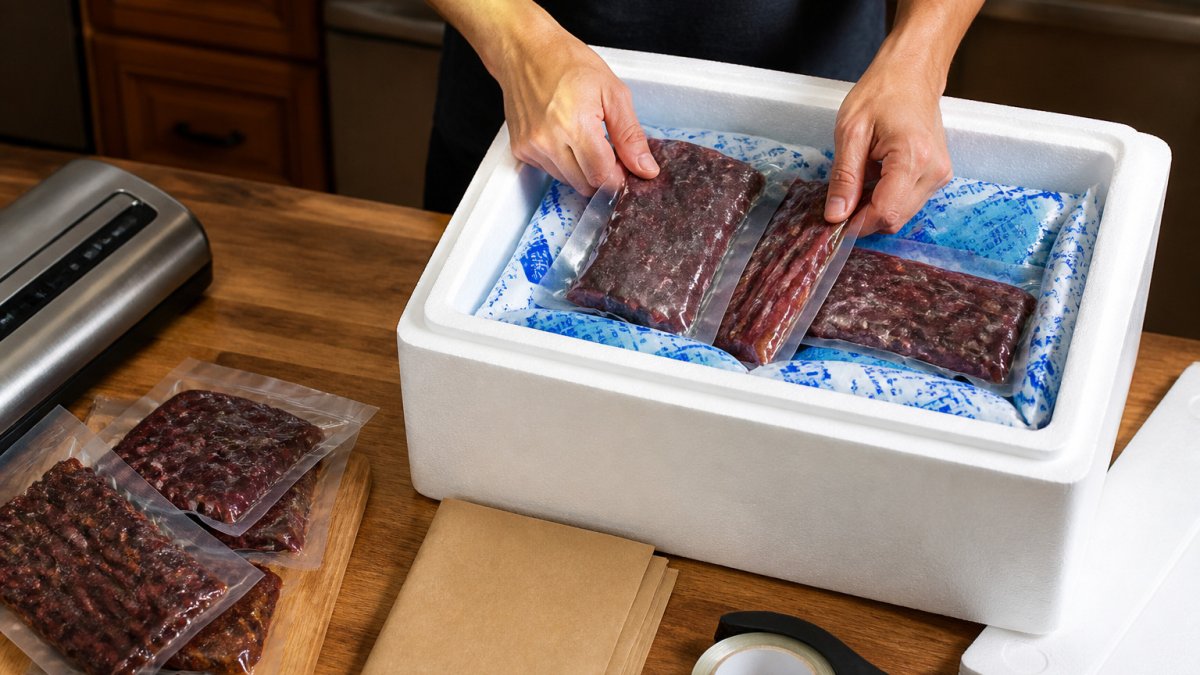
Next, build the box in layers:
- Inner packaging: Vacuum-sealed meat in leak-proof bags
- Insulation: Foam or insulated liner around the product
- Coolant: Frozen gel packs or dry ice, placed on top and around the product
- Outer box: A sturdy, tightly sealed shipping carton
Watch out: do not pack meat directly against coolant. Direct contact can partly freeze or damage the surface of the product. Keep a barrier layer between them.
Shipping Frozen Meat vs. Chilled Meat
Frozen and chilled meat ship in different ways. If you are also weighing what separates grass-fed from grain-fed beef before choosing a cut, that page explains the differences. Frozen meat stays firm and is more forgiving of longer transit times, as long as it stays frozen. Chilled meat is fresh but has a tighter safety window, so it needs faster delivery.
Choose frozen shipping if the delivery could take more than a day or two. Choose chilled shipping only when you can guarantee a quick, scheduled arrival.
Frozen meat must arrive frozen to be safe for refreezing. Confirm the carrier's guarantee before you ship.
Shipping Meat with Dry Ice
Dry ice is the most common coolant for long or uncertain trips. It stays much colder than gel packs and sublimates, meaning it turns to gas instead of melting into water.
Use dry ice carefully. Carriers regulate it as a hazardous material, and you must label the box correctly. Leave room for the gas to escape, because a sealed box with dry ice can build pressure.
Basic dry ice guidelines:
- Use enough dry ice to last the full transit time with a margin
- Place dry ice on top of the product, where cold air sinks
- Never seal dry ice in an airtight container
- Mark the package with the required dry ice label
Dry ice is the most common coolant for long or uncertain trips, and the basic guidelines are worth keeping in view while you pack.
| Guideline | Why it matters |
|---|---|
| Enough dry ice for full transit with a margin | Covers delays so product stays cold |
| Place dry ice on top of the product | Cold air sinks around the product |
| Never seal dry ice in an airtight container | Gas needs room to escape |
| Mark the package with the dry ice label | Carriers regulate it as hazardous |
Choosing a Carrier and Shipping Meat Overnight
Overnight shipping gives the shortest transit time, which is the goal for fresh meat. Compare the main carriers on speed, cutoff times, and perishable rules. Pick one that offers overnight service to your destination on a fixed schedule.
Check these points before you book:
- The guaranteed delivery day and time
- The cutoff time for drop-off or pickup
- Whether the carrier accepts dry ice or gel packs
- The rules for Saturday and holiday delivery
Book the earliest weekday you can. Mid-week shipments avoid weekend delays that leave boxes sitting in warm trucks.
Booking Your Shipment Through Makana Wild
At Makana Wild, we ship venison jerky and island-raised beef with cold-chain care in mind. Our wild-harvested venison and grass-fed beef are free from antibiotics, hormones, and pesticides.
Shipping prices depend on the destination, the quantity, the time of year, and the delivery speed you choose. For current rates and a quote for your address, visit our website.
Ready to get started? Ask whether you can buy meat without a subscription before you commit to a plan. You can also compare how meat delivery services handle carriers and shipping to see how the options stack up. Once you have your cooler and carrier chosen, you are ready to send your order and make the first step count.
Frequently Asked Questions
How do you ship fresh meat safely?
Keep the meat at 40°F or below during transit by pairing sturdy, leak-proof packaging with an insulated shipping box and enough frozen gel packs or dry ice to last the full transit time. Pack meat in airtight vacuum-sealed bags, wrap each portion separately to prevent thawing, and place the coldest items on the bottom. Choose a carrier with overnight or two-day service so the package spends as little time in transit as possible. Check the carrier's rules for perishable goods before you ship, since some carriers restrict certain packaging types or dry ice quantities.
Should meat be shipped frozen or refrigerated?
Frozen meat is the safer choice for longer transit times, because it stays at a safe temperature far longer than chilled meat. Chilled meat requires tighter timing and is best reserved for overnight delivery to nearby addresses. Frozen shipments that arrive still hard or with ice crystals can usually be refrozen, but meat that has thawed and warmed above 40°F for more than two hours should be discarded. Plan your shipment around the delivery window and the coldest packaging you can afford.
How long can meat stay cold in a shipping box?
How long a box stays cold depends on insulation quality, outside temperature and how full the box is. Dry ice sublimates over time, so the amount needed depends on transit length. Ask your carrier for guaranteed delivery times and avoid weekend or holiday delays, which can add days to transit. Most shipping problems come from unexpected delays rather than the packaging itself.
Can you ship fresh meat through FedEx or UPS?
Major carriers including FedEx and UPS offer overnight and two-day services that can move perishable food, but their rules for dry ice, packaging and labeling differ. Review each carrier's current perishable and dry ice policies before shipping, and confirm delivery timing for your ZIP code. Pricing depends on package weight, dimensions, service level and delivery distance, so compare quotes directly with each carrier.