

Quick Summary
Finishing salt is a flaky, crunchy salt sprinkled over grilled meat right before serving, while cooking salt and dry-brining salt go on earlier to season the meat from within. Choose a large flake for thick, fatty cuts like ribeye and a finer flake for delicate meats and fish. Apply it after resting, not during grilling, so the crunch survives.
- Season early with a coarse, measurable salt such as kosher or coarse sea salt.
- Apply finishing salt after grilling and resting, not during cooking, so the crunch survives.
- Use a three-finger pinch of flake across the slices for a 12-ounce steak.
- Match flake size to the meat: big flakes for ribeye, fine flakes for fish and skirt steak.
- Taste one slice before adding more finishing salt, since you can add but not subtract.
Table of Contents
- Finishing Salt vs. Cooking Salt vs. Dry-Brining Salt: What Each One Does
- Which Salt Texture and Flavor Suits Each Grilled Meat
- Popular Finishing Salt Flavors and What They Add to Grilled Meat
- Maldon Finishing Salt and How It Compares to Flaky Sea Salts
- How to Use Finishing Salt on Steak: Amounts, Timing and Technique
- Best Salt for Steak Seasoning: Budget, Mid-Range and Premium Picks
- Choosing Your Finishing Salt for Your Next Cookout
- Frequently Asked Questions
Finishing Salt vs. Cooking Salt vs. Dry-Brining Salt: What Each One Does
Last Updated: November 14, 2026
Finishing salt is the flaky, crunchy salt you sprinkle over meat right before it hits the plate. Cooking salt goes in earlier, dissolving into the meat or pan so it seasons from the inside out. Dry-brining salt is applied hours or days ahead to draw moisture out and back in, changing the texture of the meat itself. Choosing the right salt for the right job matters, because the wrong salt can leave a good steak tasting flat or harsh.
Finishing salt works on the surface. Its large, irregular flakes stay intact on the grill-marked crust, so each bite delivers a burst of salinity and a light crunch. Cooking salt, usually fine and dense, disappears into the meat during cooking. Dry-brining salt is typically kosher or coarse, measured by weight, and applied well before cooking.
Our practical rule is simple: season early with a coarse salt you can measure, and finish with a flake you can see.
Which Salt Texture and Flavor Suits Each Grilled Meat
Most rankings stop at steak. Grilled meat is broader than that, and the right finishing salt changes with the cut, the fat content, and how the meat is served. Use this as a decision guide: pick the meat, then the texture, then the flavor.
Steak (ribeye, strip, skirt). Thick, fatty cuts carry a loud crunch and a bold flavor. Choose a large, pyramid-style flake for ribeye and strip so the crunch registers against the char; choose a finer flake for skirt and flank, where slices are thin and a big crystal overwhelms the bite. Smoked or garlic-forward salts suit ribeye; a clean plain flake suits a dry-aged strip where the beef flavor should lead.
Burgers. The patty is already salty from the pre-grill seasoning, so finish lightly. A medium flake applied to the top bun-side surface just before serving gives crunch without turning the burger into a salt bomb. Smoked salts work well here because the smoke echoes the char.
Lamb. Lamb's gamy, fatty character stands up to assertive flakes. A pepper-forward finishing salt or a smoked salt complements chops and leg steaks; a plain flake is the safer choice for a delicate, grass-fed rack. Apply to the rested cut surface so the flake doesn't dissolve into the fat.
Pork. Pork loin and chops are lean and mild, so a mineral-forward plain flake or a mild pepper flake lets the char come through. Fatty pork shoulder and ribs can take a bolder smoked salt. Avoid heavily floral or sweet salts on pork unless the dish is built around them.
Poultry. Chicken and turkey are the most neutral proteins, which makes them the best canvas for flavored salts. A lavender or citrus-forward flake works on grilled chicken breast in a way it never would on beef. For skin-on thighs, use a medium flake so it clings to the rendered skin instead of bouncing off.
Seafood. Fish and shellfish need the lightest hand. A fine flake dissolves quickly on a hot fillet and seasons without a crunch that fights the delicate texture. Save the big pyramid flakes for steaks and chops.
Vegetables and sides. Grilled vegetables, especially corn and asparagus, take a coarse flake well because the surface is wet and the crystal sticks. A smoked salt on grilled corn is one of the most reliable pairings in the category.
A simple rule: the fattier and thicker the meat, the bigger and bolder the flake; the leaner and more delicate the meat, the finer and cleaner the salt. Match the crunch to how much chew the meat already has, and match the flavor to how much the meat can carry without being buried.
Popular Finishing Salt Flavors and What They Add to Grilled Meat
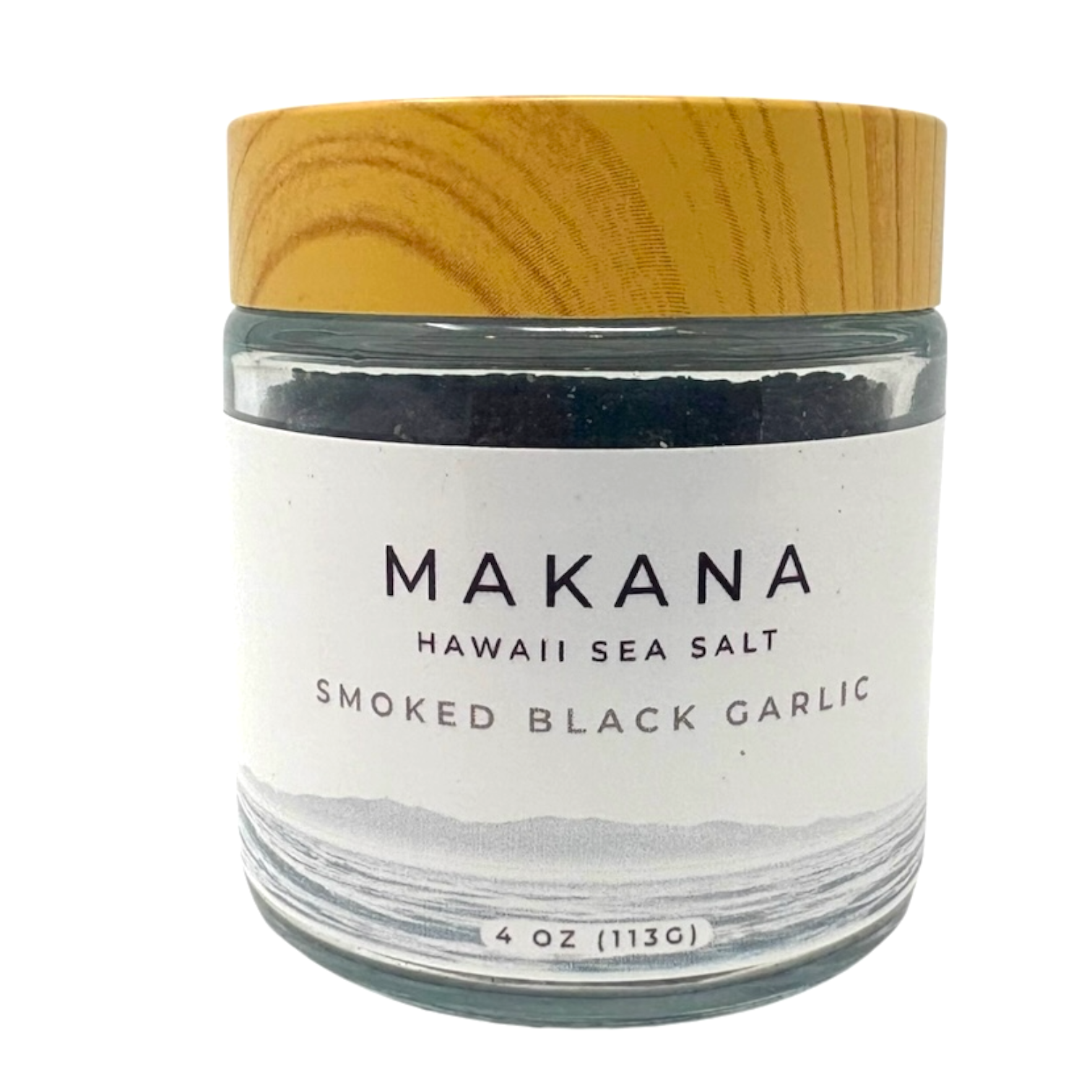
Flavored finishing salts are where grilled meat gets interesting. Makana Hawaii Sea Salt Smoked Black Garlic Finishing Salt, 4 oz, at $12.99, brings a sweet, savory, smoky depth that suits steak and burgers, and you can shop the smoked black garlic finishing salt to try it yourself. Makana Hawaii Sea Salt Basque Finishing Salt, 4 oz, at $12.99, blends Hawaiian sea salt with a Basque pepper blend. For a gentler kick, the Espelette pepper finishing salt at $12.99 adds mild heat and fruity warmth without overwhelming the meat. Makana Hawaii Sea Salt Lavender Finishing Salt, 4 oz, at $12.99, is made with Hawaiian sea salt and culinary lavender.

Maldon Finishing Salt and How It Compares to Flaky Sea Salts
Maldon is the benchmark for plain flaky finishing salt. Its pyramid-shaped crystals are known for a clean, light crunch that dissolves quickly on the tongue, which makes it a dependable default for steak. Compared with other flaky sea salts, Maldon tends to be less mineral-forward and less briny, so it adds texture without changing the flavor of the meat much.
If you want the flavor of the meat to lead, Maldon is hard to beat. If you want the salt to be part of the taste, a more assertive flake is the better pick.
How to Use Finishing Salt on Steak: Amounts, Timing and Technique
Timing is the whole game with finishing salt. The same flake applied at the wrong moment either burns off or never gets tasted.
Before grilling. Season with a coarse, measurable salt, kosher or coarse sea salt, about 40 minutes ahead for a steak an inch thick, or up to a few hours ahead for a thicker cut. This is dry-brining territory: the salt draws moisture to the surface, dissolves, and reabsorbs, seasoning the meat from the inside. Do not use a delicate flake here; it dissolves and disappears, and you pay a premium for texture you never taste.
During grilling. Add nothing. Opening the lid to sprinkle salt mid-cook only loses heat and gives you an uneven crust. If you want a flavored salt on the grill, apply it in the last 30 seconds over direct heat so it warms without scorching.
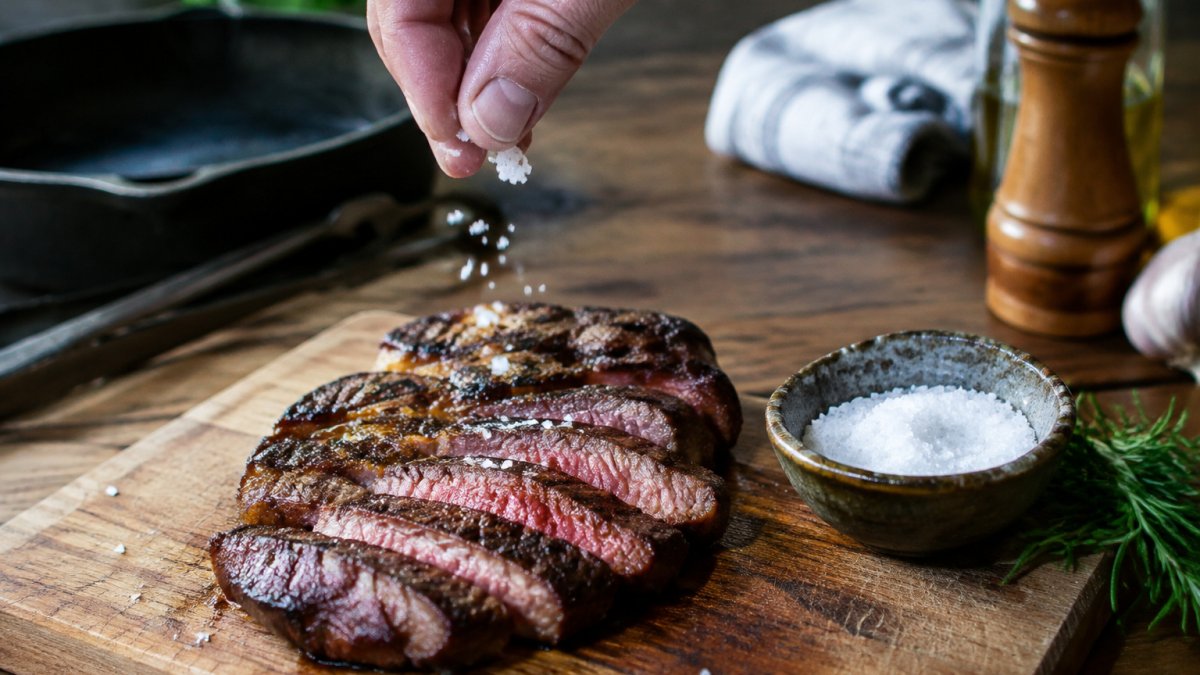
After grilling. Rest the steak five to ten minutes, then apply the finishing salt to the cut surfaces and the crust. This is where flaky salt earns its place: the flakes sit on top, stay crisp, and deliver a burst of salinity and crunch on each bite.
How much. A common starting point is about a teaspoon of flake per pound of meat, but coverage matters more than volume. Hold the salt a foot above the plate and let it fall in an even shower; you want a light, visible scatter across the surface, not a pile in one spot. For a single 12-ounce steak, that is roughly a three-finger pinch, spread wide. Taste one slice before adding more, you can always add, never subtract.
Coverage. Aim for flakes on roughly half the surface area of each slice, not full coverage. Finishing salt is a highlight, not a crust. On a sliced steak, salt the cut faces, not the outer char, so the crystal meets the juicy interior.
Watch out: adding flaky salt before the grill burns off much of its texture and flavor, leaving a salty crust instead of a clean crunch. And if you salt after resting but before slicing, the flakes slide off the slick surface, salt the slices, not the whole steak.
A quick reference. For a 1-inch ribeye: coarse salt 40 minutes ahead, rest 5-10 minutes after grilling, then a three-finger pinch of flake across the slices. For a thin skirt steak: coarse salt 20-30 minutes ahead, rest 5 minutes, and a lighter two-finger pinch of finer flake so the crunch doesn't overwhelm the thin slices.
Best Salt for Steak Seasoning: Budget, Mid-Range and Premium Picks
Budget picks are a bulk kosher salt for the pre-sear seasoning and a small jar of flake for finishing. A mid-range setup adds a flavored finishing salt for one or two meals a month.
| Tier | Best use | Example | Price |
|---|---|---|---|
| Budget | Pre-sear seasoning | Bulk kosher salt | Varies by brand |
| Mid-range | Everyday finishing | Plain flaky sea salt | Varies by brand |
| Premium | Special meals and gifts | Makana Hawaii Sea Salt flavors, 4 oz | $12.99 each |
The Makana Hawaii Sea Salt finishing salts are priced at $12.99 for 4 oz.
Choosing Your Finishing Salt for Your Next Cookout
Start with the meat, then the flavor, then the crunch. If you cook steak most weekends, keep a plain flake for daily use and a flavored salt for special nights. If you grill a variety of meats, pick one versatile flake and one bold option to rotate.
The best finishing salt is the one you actually reach for.
Frequently Asked Questions
What is the best salt for grilling?
For grilling, use a coarse kosher salt or a sturdy sea salt to season meat before it hits the grill, because larger crystals stick to the surface and distribute evenly. Save delicate flaky finishing salts for the moment just before serving, when their crunch and clean mineral flavor can register. Many cooks keep two salts on hand, one for seasoning during prep and another for finishing. The right choice depends on whether you want the salt to season the meat's interior or add a bright, textured final layer.
Is kosher salt or flaky sea salt better for grilled meat?
Neither is better in every case, since each does a different job. Kosher salt is ideal for seasoning and dry-brining because its large, irregular flakes dissolve predictably and are easy to pinch and spread. Flaky sea salt works best as a finishing salt sprinkled over cooked meat, where its crisp texture gives a satisfying crunch. For a steak, season with kosher salt before grilling, then add a light pinch of flaky salt after resting. Using both gives you seasoning depth and a textural finish.
When should you add finishing salt to grilled meat?
Add finishing salt after the meat comes off the grill and has rested for a few minutes, just before slicing or serving. Heat and moisture dissolve flaky salt quickly, which blunts its crunch and makes the flavor less distinct. A light sprinkle at the end preserves the texture that makes these salts worth buying. Keep the salt within reach during plating, and add it to each slice or serving rather than the whole platter so every bite gets a little crunch.